
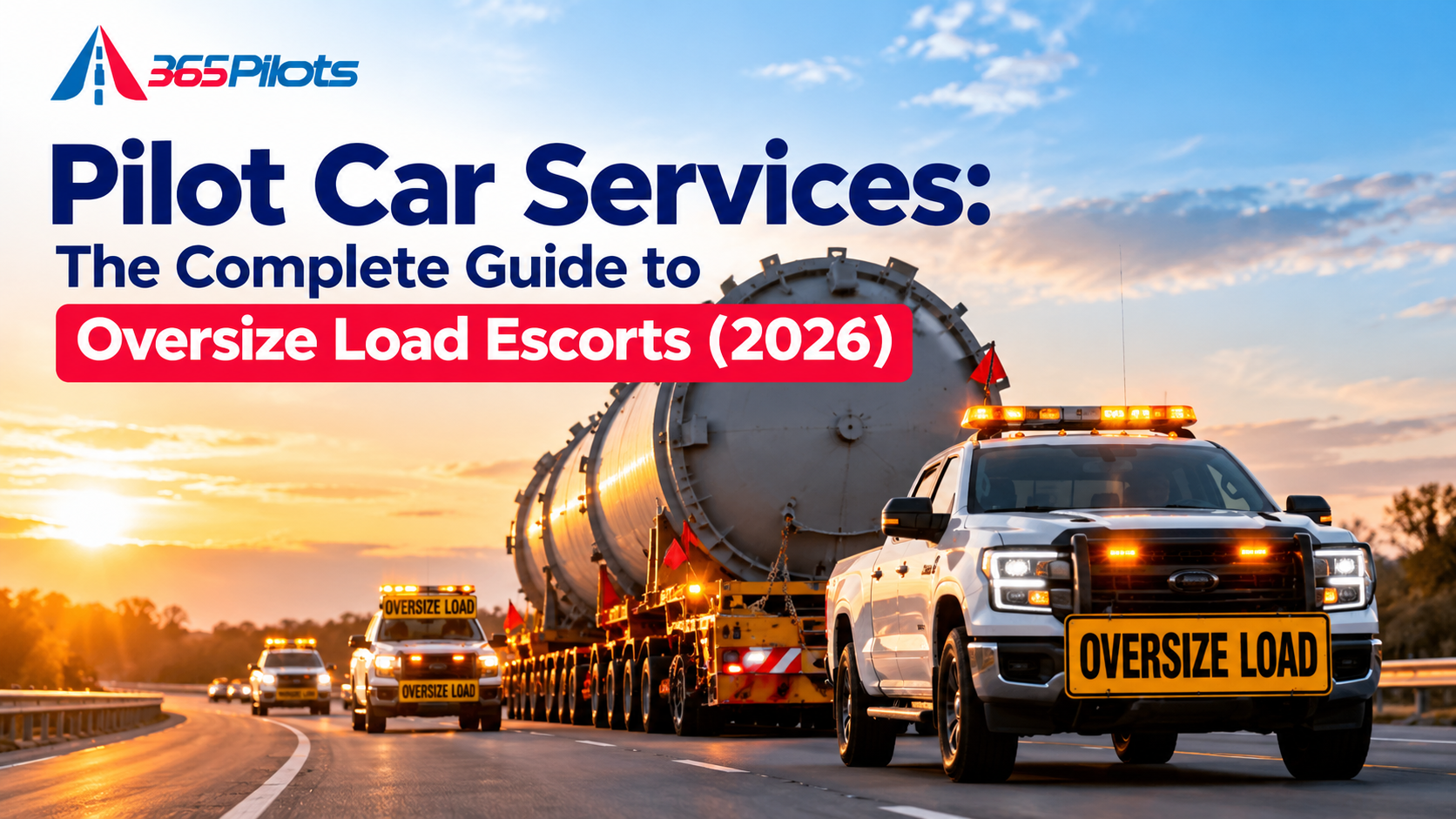
Pilot car services provide trained, certified escort vehicles that travel ahead of, behind or beside an oversize load. They warn other drivers, check clearances, and keep the truck legal under its state permits. Most states require one or more pilot cars once a load passes certain width, height or length limits, and those limits differ from state to state.
If you ship wind blades, construction equipment, modular homes or industrial machinery, pilot cars are part of the job. This guide explains how escort services work, when you need them, what they cost, and how to book the right team for a nationwide move.
What Is a Pilot Car?
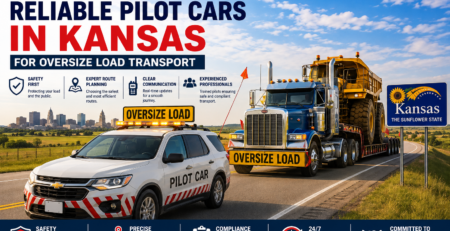
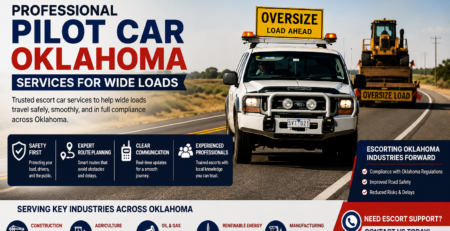
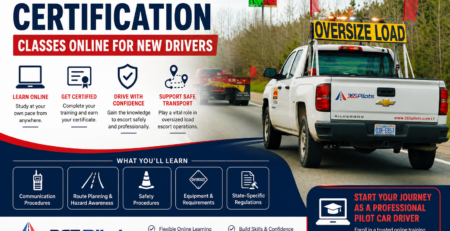
A pilot car, also called an escort vehicle, flag car or PEVO (Pilot/Escort Vehicle Operator), is a light vehicle that travels with an oversize load. It carries “OVERSIZE LOAD” signs, amber warning lights, flags and a two-way radio. Its main jobs are to:
- Warn approaching traffic that a wide, tall or long load is on the road
- Spot hazards such as low bridges, power lines, narrow lanes and tight turns
- Talk the truck driver through lane changes, intersections and stops
- Keep the move compliant with the conditions printed on the state permit
Put simply, the truck driver controls the load and the pilot car driver watches the road around it.
Types of Pilot Car Services
Every oversize move is different, so escort work is split into specialized roles. Here is what each service does and when it is typically needed.
Service | Position | What It Does | Typically Needed For |
Lead Car | In front of the load | Warns oncoming traffic, scouts the road ahead, calls out hazards | Wide loads on two-lane roads |
Chase Car | Behind the load | Protects the rear, manages lane changes, watches for overhang | Long loads, very wide loads on multi-lane highways |
High Pole (Height Pole) | In front, with a measuring pole | Tests overhead clearance before the truck reaches it | Tall loads (often 14’6″–17’+ depending on state) |
Steerman / Tillerman | Rides with or controls the rear trailer | Steers rear axles on long or specialized trailers | Wind blades, long beams, superloads |
Route Survey | Before the move | Drives and measures the full route in advance | Superloads, tall or unusual loads, new routes |
Night Moves | Lead / chase after dark | Escorts loads cleared for overnight travel | Urban areas and permit-restricted daytime routes |
At 365 Pilots, we provide every service in this table, plus Passport- and TWIC-credentialed drivers for border crossings and port access.
When Is a Pilot Car Required?
There is no single federal rule for escorts. Each state sets its own requirements, usually based on:
- Width: the most common trigger
- Height: usually calls for a high pole car
- Length and overhang: often calls for a rear (chase) car
- Road type: two-lane roads usually need more escorts than interstates
- Weight: superloads may need police escorts and route surveys
Example: Texas Escort Requirements
Texas is one of the busiest oversize states. Its rules show how these triggers work in practice:
Load Dimension | Escorts Required in Texas |
Width over 14′ up to 16′ | 1 front escort on two-lane highways |
Width over 16′ | Front and rear escorts |
Height over 17′ | 1 front escort with a height pole |
Length 110’–150′ | Rear escort (convoy rules apply) |
Load exceeds two dimensions | Front and rear escorts |
Source: Texas Department of Motor Vehicles (TxDMV). Always confirm against your permit, because rules change.
Cross into Oklahoma, Louisiana or New Mexico and the thresholds change. That is why multi-state moves need escorts who are certified in every state on the route. See our state guides for Texas and Tennessee, or browse all service areas.
How Many Pilot Cars Do I Need?
Use this as a quick planning guide, then confirm with your permit:
Load Profile | Typical Escort Setup |
12’–14′ wide, legal height, interstate | 0–1 escort (varies by state) |
14’–16′ wide, two-lane roads | 1 lead car |
16’+ wide | Lead + chase |
Tall load (near or above state height limit) | High pole + possibly chase |
Long load (110’+) or big overhang | Chase car, sometimes a steerman |
Superload (very wide, tall, long or heavy) | Lead, chase, high pole, route survey, possibly police |
How Much Do Pilot Car Services Cost? (2026 Rates)
Pilot cars are usually priced per mile with a daily minimum. Typical 2026 industry ranges:
Service | Updated Rate |
Lead or chase car | $1.75 – $2.00 per mile |
High pole car | $1.85 – $2.50 per mile |
Steer car / tillerman | $1.95 – $3.00 per mile (+ daily fee) |
Superload escort | Typically ($550 – $850/day) |
Layover / lost day | Up to $250 per day |
No-go / cancellation | Up to $350, plus overnight charges |
What raises the price: night moves, short-notice dispatch, deadhead miles to reach pickup, multiple escorts, urban routing, layovers caused by weather or permit curfews, and route surveys.
Example: A 500-mile move with one lead car at $1.75–$2.00 per mile costs approximately 875–1,000 in mileage. High pole services, daily fees, layovers, or no-go/cancellation charges may increase the final cost.
For an exact number, request a quote from 365 Pilots. We price by route, load dimensions and escort type.
What Equipment Must a Pilot Car Carry?
Equipment rules vary by state, but a fully equipped pilot car usually has:
- “OVERSIZE LOAD” sign: yellow with black letters, roof-mounted (Texas, for example, requires 5–7 ft long and 12–18 in high)
- Amber flashing or rotating lights visible from all sides
- Red or orange warning flags
- Two-way CB or radio to talk with the truck driver
- Height pole (high pole cars only), made of non-conductive material
- Safety gear: hard hat, high-visibility vest, STOP/SLOW paddle, cones, fire extinguisher, first-aid kit
- Proof of state certification and commercial auto insurance
How to Choose a Pilot Car Company
A bad escort can cost you a ticket, a missed delivery or a bridge strike. Before you book, check:
- Certifications: Are drivers certified in every state on your route?
- Insurance: Do they carry commercial liability coverage, and can they send a certificate?
- Dispatch speed: Can they cover same-day or short-notice loads?
- Nationwide coverage: Can one company handle the whole route?
- Specialty services: Do they offer high pole, steer, route surveys and night moves?
- Credentials: Do they have TWIC drivers for ports and Passport holders for Canada?
- Clear pricing: Do they give per-mile, minimum and layover rates up front?
Why Shippers Choose 365 Pilots
365 Pilots is a nationwide pilot car dispatch built for carriers, brokers and heavy-haul shippers.
- 24/7 nationwide service across the United States
- Fast dispatch with expert route planning
- Full service range: lead, chase, steerman, tillerman, height pole, route surveys, night moves and super/mega loads
- Credentialed drivers: Passport and TWIC available
- Pilot car load board connecting certified operators with loads that need them
Need a pilot car? Call 866-795-0150 or book online.
Frequently Asked Questions
Q. What is the difference between a pilot car and an escort vehicle?
They are the same thing. “Pilot car,” “escort vehicle,” “flag car” and “PEVO” all describe a vehicle that escorts an oversize load.
Q. Do I need a pilot car for a 12-foot-wide load?
It depends on the state and the road. Many states allow 12-foot loads on interstates without an escort but require one on two-lane roads. Your permit lists the exact requirement.
Q. Who pays for the pilot car?
Usually the carrier or shipper who holds the oversize permit, as agreed in the transport contract.
Q. Do pilot car drivers need to be certified?
In many states, yes. States including Texas, Washington and New York have their own certification or reciprocity rules, so multi-state moves need drivers who are certified in each of them.
Q. Can pilot cars run at night?
Only when the permit allows it. Many states restrict oversize travel to daylight hours, but some loads are cleared for night moves, and some cities require them.
Q. How far in advance should I book a pilot car?
24–48 hours ahead is ideal. With a nationwide network, 365 Pilots can often cover same-day dispatch.


Leave a Reply