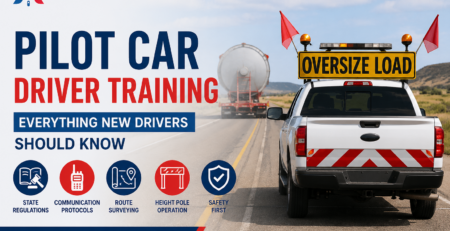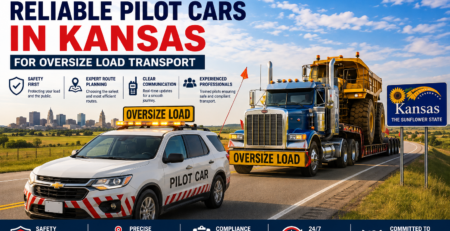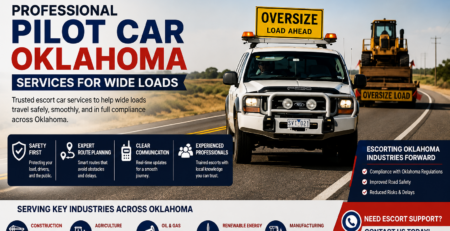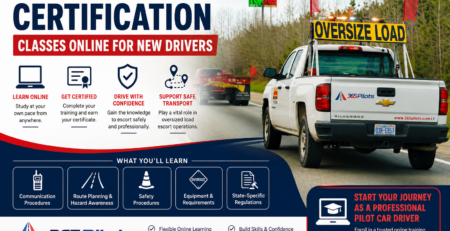
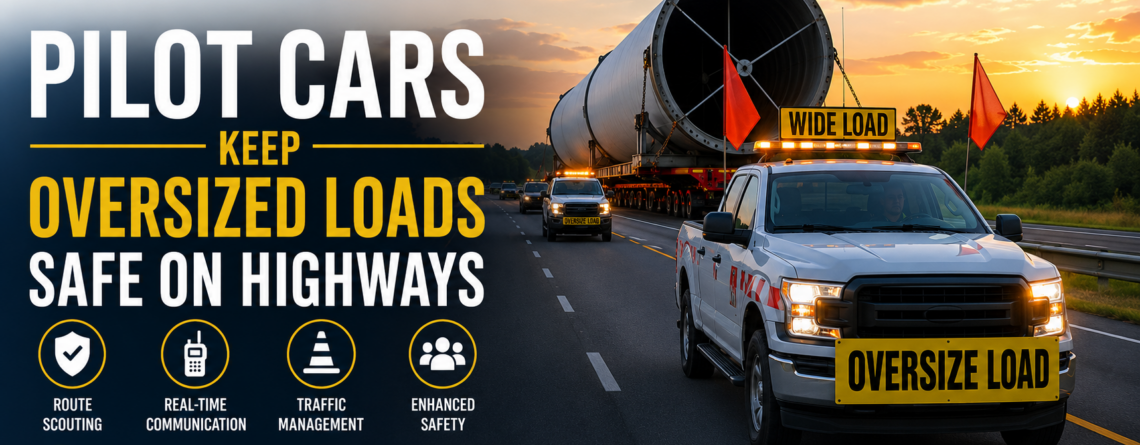
Pilot cars keep oversized loads safe by scouting routes ahead of time, identifying hazards like low bridges and narrow lanes, managing traffic flow around the load, and maintaining constant radio communication with the truck driver.
They act as an early-warning system, giving truckers time to react to obstacles that would otherwise be invisible from inside the cab of a massive rig hauling an oversized shipment.
Anyone who’s driven behind an oversized load on the highway has probably wondered how something that big moves safely through traffic, construction zones, and tight overpasses without constant incidents. The answer isn’t luck; it’s coordination.
Pilot cars, sometimes called escort vehicles, are the unsung infrastructure of oversized freight transport. They’re the reason a 150-foot wind turbine blade or a 200,000-pound piece of industrial equipment can travel hundreds of miles without disaster.
Here’s a closer look at exactly how pilot cars function, why they matter so much, and what the process looks like from start to finish.
The Core Problem Pilot Cars Solve
Truck drivers hauling oversized loads face a visibility problem. From inside a cab towing a load that might be 12, 14, or even 16 feet wide, drivers simply can’t see everything relevant to their route — especially hazards further down the road. A pilot car solves this by putting a second set of eyes (and sometimes multiple vehicles) ahead of and behind the load, feeding real-time information back to the driver.
| Hazard Type | Why It’s Dangerous for Oversized Loads |
| Low bridges/overpasses | Load height may exceed clearance, causing collision |
| Narrow lanes/shoulders | Load width may not fit safely without adjustment |
| Sharp curves | Long loads may not clear the turn radius |
| Construction zones | Lane shifts and barriers can trap oversized vehicles |
| Utility lines | Height poles must confirm safe clearance |
| Heavy traffic areas | Requires coordinated lane control to prevent bottlenecks |
The Roles Pilot Cars Play
Depending on the load’s size and route complexity, a shipment might require one, two, or even four escort vehicles working together.
| Role | Position | Primary Responsibility |
| Lead car | Ahead of the load | Scouts hazards, confirms clearances, warns oncoming traffic |
| Chase/trail car | Behind the load | Manages rear traffic, signals lane changes, protects blind spots |
| Height pole car | Usually leads | Physically tests overhead clearance before the load arrives |
| Steer car (for superloads) | Attached to load | Assists with steering on extremely long loads |
For massive shipments — think wind turbine components, bridge beams, or oversized modular units — it’s common to see a full team of escort vehicles working in sync, each with a specific job.
Step-by-Step: How a Pilot Car Escort Actually Works
- Route review – Before the load ever moves, the route is checked for permit compliance, clearance heights, and known hazards.
- Pre-trip communication – The pilot car team and truck driver align on radio channels, signals, and timing.
- Lead car departs first – Scouting hazards a mile or more ahead, especially bridges, turns, and construction.
- Height pole checks – At any questionable clearance, the height pole confirms safe passage before the load approaches.
- Continuous radio updates – Drivers relay real-time conditions: traffic, weather, lane closures, oncoming hazards.
- Traffic control at pinch points – Escort vehicles may briefly stop or slow traffic to allow safe passage through narrow sections.
- Trail car manages rear safety – Watching for tailgaters, aggressive drivers, or vehicles trying to pass unsafely.
- Arrival confirmation – Once the load reaches its destination, the team confirms safe delivery and documents the route.
Why Communication Is the Real Backbone of Safety
Vehicles and signage matter, but the real safety mechanism behind pilot car escorts is constant, disciplined communication. A lead car might report a lane narrowing two miles ahead, giving the truck driver time to adjust speed or positioning well before reaching it. Without that early warning, the same hazard could force a last-second reaction — which, for a load that can weigh well over 100,000 pounds, isn’t something you want to rely on.
This is part of why experienced logistics teams treat pilot car coordination as a core part of the shipment plan, not an afterthought. Services like 365 Pilots focus specifically on this coordination — matching trained, certified escort drivers to routes based on load size, terrain, and state requirements, so the communication chain stays tight from pickup to delivery.
Common Situations Where Pilot Cars Prevent Serious Incidents
| Scenario | How the Pilot Car Helps |
| Load approaches a bridge with unclear height rating | Height pole confirms clearance before the load commits |
| Highway lane closes unexpectedly | Lead car alerts driver early, allowing route adjustment |
| Load must merge through construction | Escort vehicles control traffic gaps for a safe merge |
| Sudden weather change (fog, rain, wind) | Escort team advises on visibility and wind risk for tall loads |
| Aggressive drivers trying to pass | Trail car manages spacing and discourages unsafe passing |
Regulatory Reasons Pilot Cars Are Required
Beyond safety, most states legally require pilot car escorts once a load exceeds certain width, height, or length thresholds. These thresholds vary, but escorts commonly become mandatory when:
- Load width exceeds 12 feet
- Load height exceeds 14–15 feet
- Load length exceeds certain state-specific limits
- The route includes narrow roads, tight turns, or low-clearance structures
Permits typically specify exactly how many escort vehicles are required and where they must be positioned, which is why route planning and pilot car coordination usually happen together rather than as separate steps.
Final Thoughts
Pilot cars aren’t just a regulatory requirement; they’re an active safety system that prevents accidents before they happen.
Through careful route scouting, constant communication, and coordinated traffic management, escort vehicles give oversized loads the visibility and reaction time they’d otherwise lack.
For companies moving heavy or oversized freight, partnering with a reliable pilot car service means fewer delays, safer routes, and far less risk on every mile of the journey. Contact us today to learn how our experienced pilot car team can support your next oversized load with safe, dependable escort services.
FAQs
How many pilot cars does an oversized load typically need?
It depends on load size and state law — smaller oversized loads may need just one escort, while superloads can require two to four vehicles, including height pole and steer car support.
Do pilot cars communicate directly with the truck driver?
Yes, continuously. Most use two-way radios to relay real-time updates about hazards, traffic, and route conditions throughout the trip.
Can pilot cars operate at night?
Some states restrict oversized load movement to daylight hours, but where night travel is permitted, escort vehicles use enhanced lighting and signage for visibility.
What happens if a pilot car identifies a hazard the load can’t safely pass?
The team typically halts the load, reassesses the route, and coordinates an alternate path or, if needed, contacts local authorities for guidance.
Are pilot car requirements the same in every state?
No. Thresholds for width, height, and length that trigger escort requirements vary significantly by state, which is why route-specific permit review is essential before a load moves.