
Introduction
Pilot car driving has become a steady career path for people who enjoy being on the road, working independently, and supporting the heavy haul trucking industry. Before taking on this role, drivers need proper training and credentials. This guide walks through how to get pilot car certification online, what the process typically involves, and what to expect once certified.
Whether you are exploring this as a new career or expanding services for an existing transport business, understanding the certification process is the first step toward working legally and safely as an escort vehicle operator. As demand for reliable escorts grows across the heavy haul industry, providers such as 365pilots continue to look for properly trained drivers who can meet state requirements and support oversize loads on the road.
What Is Pilot Car Certification?
Pilot car certification is the formal process of training and qualifying a driver to operate an escort vehicle alongside oversize or overweight loads. This certification confirms that a driver understands traffic laws, safety procedures, communication protocols, and the specific responsibilities involved in escorting heavy haul trucks.
Escort vehicle certification is not the same in every state. Some states have their own specific training and licensing requirements, while others accept certifications earned through approved third party training providers. Because of this, drivers often need to research requirements in the states where they plan to work.
Why Certification Matters
Pilot car certification exists for practical reasons, not just paperwork. Escort drivers play a direct role in public safety, which means proper training matters.
Legal Compliance
Many states require proof of training before a driver can legally operate as a pilot car escort. Operating without proper certification can result in fines, denied permits, or liability issues for both the driver and the trucking company.
Safety on the Road
Pilot car drivers need to understand how to position their vehicle, communicate with truck drivers, and identify route hazards such as low bridges or narrow lanes. Certification programs are built around these real world safety needs.
Professional Credibility
Trucking companies and logistics coordinators are more likely to hire certified escort drivers because it shows a baseline level of training and reliability. Certification can also open the door to working with established pilot car companies, including providers like 365pilots, which often work with experienced and properly trained escort drivers.
Step by Step Guide to Getting Pilot Car Certification Online
Step 1: Check State Specific Requirements
Before enrolling in any course, research the requirements for the state or states where you plan to work. Some states require state issued certification, while others accept general industry training. A few states have no formal certification requirement at all, though training is still recommended.
Step 2: Choose an Approved Training Provider
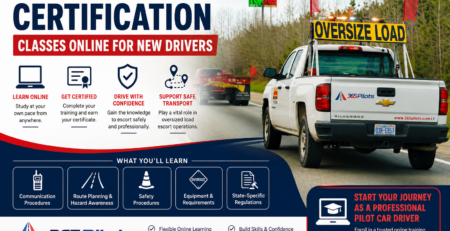
Look for an online training provider that offers pilot car certification recognized by the states you plan to work in. Reputable programs typically cover:
- State and federal oversize load regulations
- Proper use of warning signs, flags, and lighting
- Two way radio communication procedures
- Route surveying and hazard identification
- High pole escort procedures for tall loads
- Safe following and leading distances
Step 3: Complete the Online Coursework
Most pilot car certification programs are self paced and can be completed entirely online. Courses are usually broken into modules covering safety procedures, equipment use, and state regulations. Expect several hours of instructional content, often combined with quizzes to confirm understanding.
Step 4: Pass the Certification Exam
After completing the coursework, most programs require passing a final exam. This test typically covers traffic laws, escort vehicle positioning, signage requirements, and emergency procedures. A passing score usually results in a certificate or card confirming completion.
Step 5: Obtain Required Equipment
Certification alone is not enough to begin working. Escort vehicles need to be properly equipped according to state standards. Common requirements include:
- Amber rotating or strobe lights
- Oversize load signage
- Two way radios
- A height pole for high pole escorts
- Proper signage mounts and visibility markers
Step 6: Apply for State Registration or Licensing
Some states require drivers to register their certification or vehicle with a state agency before legally operating as an escort. This step varies widely, so checking with the relevant department of transportation is important.
Step 7: Gain Practical Experience
Once certified and properly equipped, new pilot car drivers often start by working with experienced escort teams or established companies. This hands-on experience helps build familiarity with real world routes, communication procedures, and load types before working independently.
Pilot Car Certification Requirements by State Type
Requirements differ depending on how a state regulates escort vehicles. The table below offers a general comparison of common state approaches. Always confirm current rules with the specific state department of transportation.
| State Requirement Type | Certification Needed | Common Additional Requirements |
| State issued certification required | Yes, state specific course | State registration, vehicle inspection |
| Third party certification accepted | Yes, approved provider course | Proof of completion on file |
| No formal certification required | Training recommended | Proper equipment still mandatory |
| Reciprocity with other states | Varies by agreement | May require additional paperwork |
This table is a general reference only. Escort vehicle certification rules can change, so confirming current requirements before starting work in a new state is always recommended.
Skills Covered in Most Certification Programs
Pilot car certification programs are designed to prepare drivers for real situations they will face on the road. Common topics include:
Escort vehicle positioning. Understanding when to lead, when to follow, and how much following distance to maintain.
Communication protocols. Learning how to relay clear, concise information to truck drivers using two way radios.
Route hazard identification. Recognizing low bridges, narrow lanes, sharp curves, and construction zones before the load reaches them.
High pole procedures. For drivers planning to work with tall loads, understanding how to use a height pole correctly is essential.
State law differences. Since requirements vary, many courses cover how regulations differ across common trucking corridors.
Choosing the Right Certification Path
Not every certification program fits every driver’s goals. A few factors to consider when choosing a course include:
State recognition. Confirm the certification is accepted in the states where you plan to work.
Course depth. Programs that cover real scenarios, not just basic definitions, tend to prepare drivers better for the field.
Support after certification. Some training providers offer guidance on equipment setup or connections to companies hiring escort drivers.
For drivers looking to work with an established pilot car company after certification, 365pilots works with trained and properly equipped escort drivers across multiple regions. Having a recognized pilot car certification can make it easier to connect with companies like prioritize safety and compliance in every oversize move.
Common Mistakes to Avoid During Certification
Skipping state research. Completing a generic course without checking state specific rules can lead to wasted time or denied registration.
Underestimating equipment costs. Certification is only one part of the process. Budgeting for proper signage, lighting, and radios is just as important.
Rushing through coursework. Moving quickly through training without fully understanding hazard identification or communication procedures can create safety risks later on the road.
Ignoring renewal requirements. Some states require periodic recertification. Keeping track of renewal dates helps avoid lapses in compliance.
Life After Certification: What to Expect
Once certified, new escort drivers typically start by taking on smaller, local jobs before moving into longer routes or more complex loads such as high pole escorts. Building a reputation for reliability and clear communication often leads to steady work, especially with companies that handle frequent oversize shipments.
Many drivers also choose to network with established pilot car providers. Working with a company like it can offer more consistent job opportunities, since these companies often coordinate escorts for ongoing trucking contracts and large scale projects.
Final Thoughts
Getting pilot car certification online is a practical first step for anyone interested in working as an escort vehicle operator. From understanding state specific requirements to completing coursework and securing proper equipment, each step plays a role in building a safe and compliant escort career. For drivers looking to connect with experienced oversize load operations after certification, it offers opportunities to work alongside a team that values safety, training, and reliable escort vehicle support. To learn more about available opportunities or get guidance on starting your escort vehicle career, contact us today and speak with our team.
Frequently Asked Questions
How long does it take to get pilot car certification online?
Most online certification programs can be completed within a few hours to a couple of days, depending on the course structure and how quickly the coursework and exam are completed.
Is pilot car certification the same in every state?
No. Requirements vary significantly by state. Some states require their own certification process, others accept third party training, and a few have no formal certification requirement at all.
Do I need special equipment after getting certified?
Yes. Certification confirms training, but escort vehicles still need proper signage, lighting, and communication equipment that meets state standards before legally operating on the road.
Can I work across multiple states with one certification?
This depends on state reciprocity agreements. Some states accept out of state certifications, while others require additional registration or training. Checking with each state’s department of transportation is recommended.
Does pilot car certification expire?
Some states require periodic renewal or recertification. It is important to check the specific renewal timeline for the certification you complete.
How do I find work after getting certified?
Many new escort drivers start by connecting with established pilot car companies. Providers such as 365pilots often work with certified drivers who meet safety and equipment standards for oversize load escorts.